Contribute to regional society (energy and mobility)
Basic approach
Initiatives for regional revitalization and solving social issues
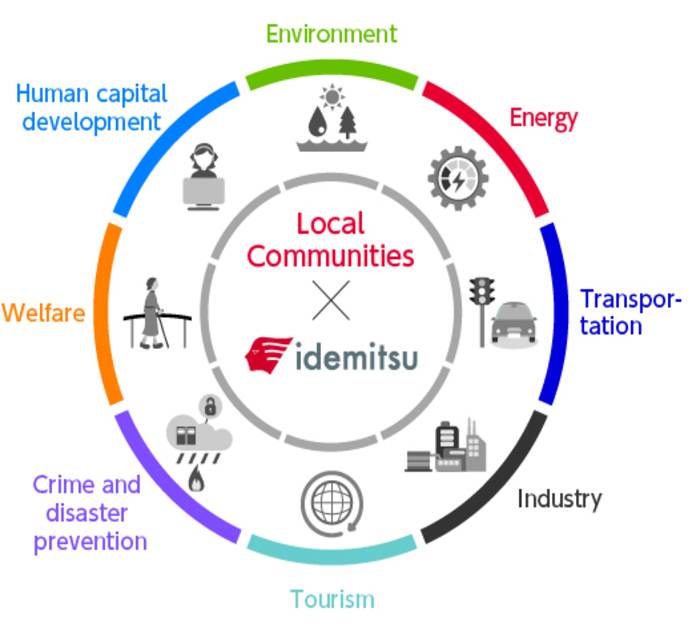
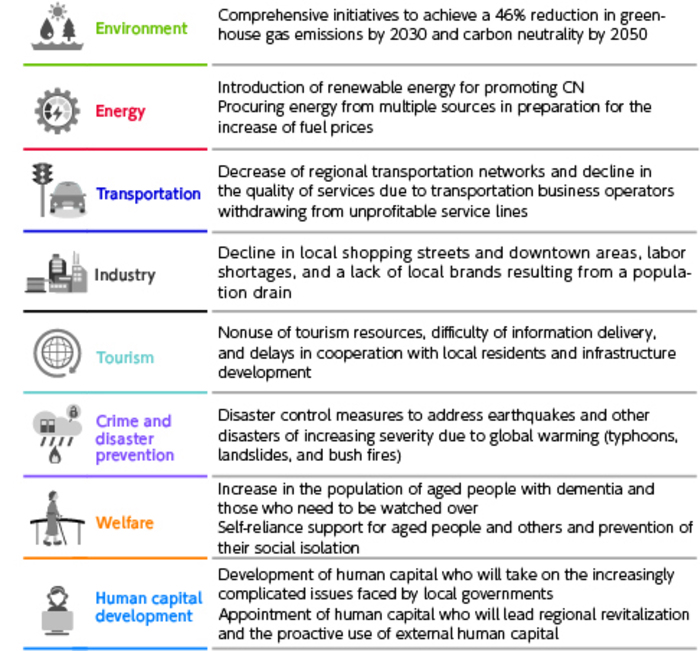
Idemitsu Kosan has positioned the resolution of social issues as an important management issue, and is working to co-create solutions that address local issues from eight perspectives, centered on energy, including the environment, transportation, industry, tourism, disaster prevention and crime prevention, welfare, and human resource development.
"Smart Yorozuya" concept, a hub for energy and mobility
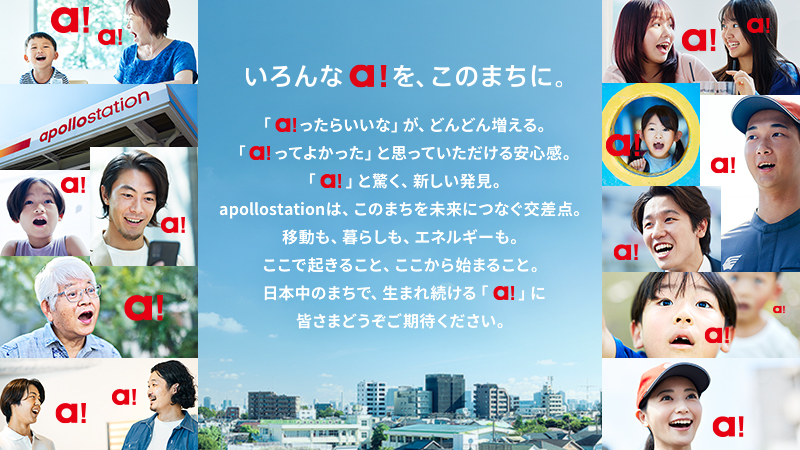
At Smart Yorozuya, we aim to evolve our brand apollostation, into a "lifestyle support hub" that supports the people of each town and their enriched lives. Under the new slogan "Various a!s in this town," apollostation will evolve into YOROZU (infinitely diverse) in line with the needs of each town, and strive to become a presence that supports energy and mobility.
Together with our important partners, dealers and transportation companies, we aim to ensure that apollostation brand continues to be supported by customers in the future.
Initiatives
Mobility services
Solving regional mobility issues by deploying mobility services
We will continue to work to solve social issues related to mobility, leveraging our strengths in the mobility field, which has supported motorization to date, and the strengths of our bases, which have contributed to local communities through the stable supply of energy.
We will further expand the customer contact base we have cultivated to date and respond to potential mobility needs through our service station network, vehicle maintenance technology, and the development of a diverse mobility lineup.In addition to developing and providing vehicles, we will also develop new subscription and car sharing models, build a digital platform for MaaS, and develop a recycling system.
Furthermore, going forward, we will work on developing new mobility services, such as combining the electricity sales offered by apollostation with various mobility devices, building distributed energy systems that treat each vehicle as a storage battery, and reusing and recycling systems for vehicles and batteries.
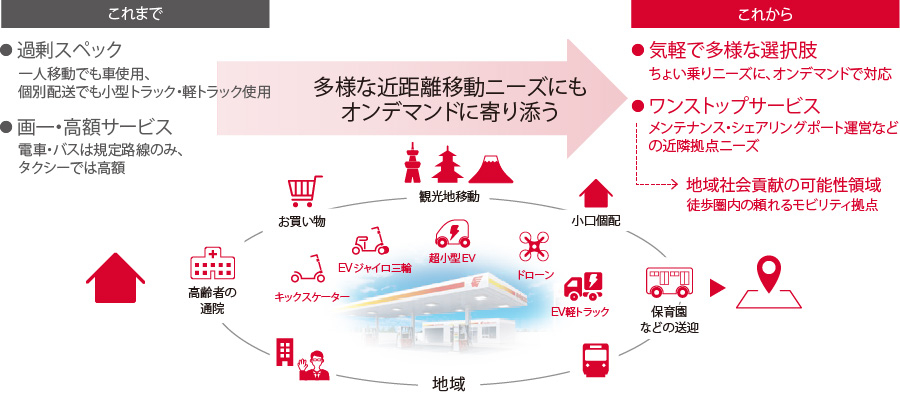
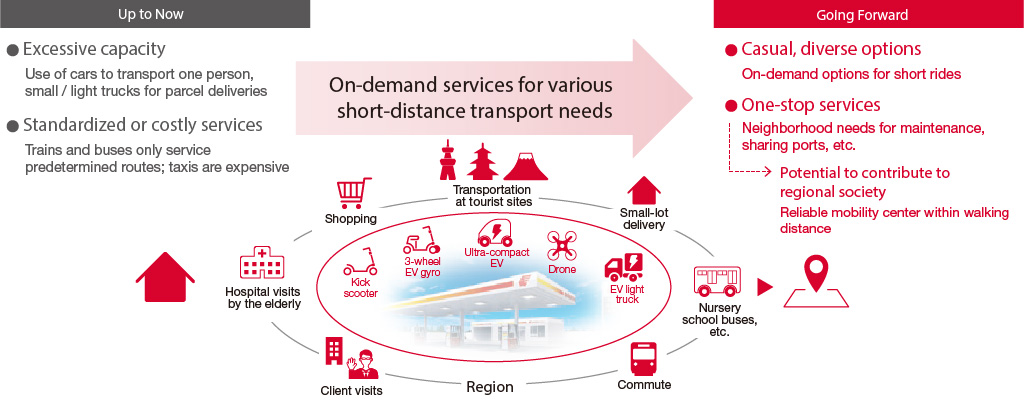
As a specific example of our efforts, we have been conducting a car sharing demonstration using ultra-compact EVs in Okuma Town, Fukushima Prefecture since October 2022. In this demonstration, we are working with Okuma Town and dealers in the region to meet the transportation needs of residents and visitors working on earthquake recovery, and to provide them with a new means of transportation. We will continue to work with local governments and dealers to develop new services that are rooted in the needs of each region.
Future concept using drones
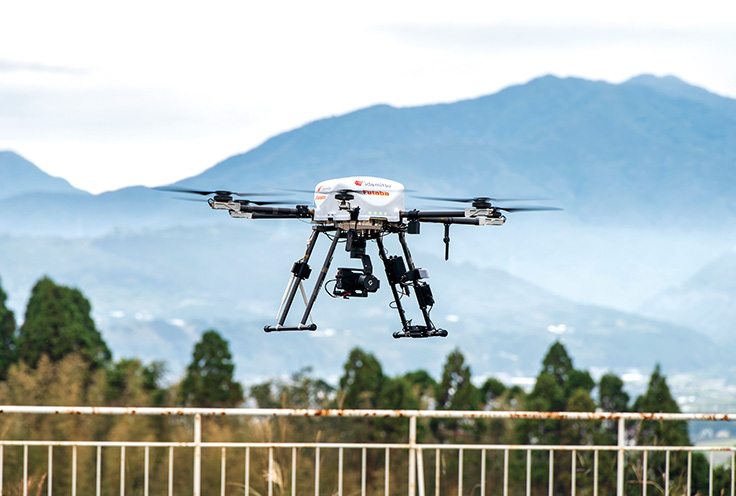
In light of the amendment to the Aviation Act in December 2022, we have begun joint development of a domestically produced drone with Futaba Corporation, with the aim of provide for society. Using this drone, we will provide services that are closely tied to the local community through gas station bases.
Currently, in addition to providing methods including aircraft maintenance, we have begun considering business ventures such as plant equipment inspection, agricultural use such as growth monitoring and pesticide spraying, and future logistics and delivery. Taking advantage of SS's strengths, we will develop a drone business that covers everything from aircraft development to operation and human resource development.
Community co-creation/life support
Tanegashima's carbon neutral initiative
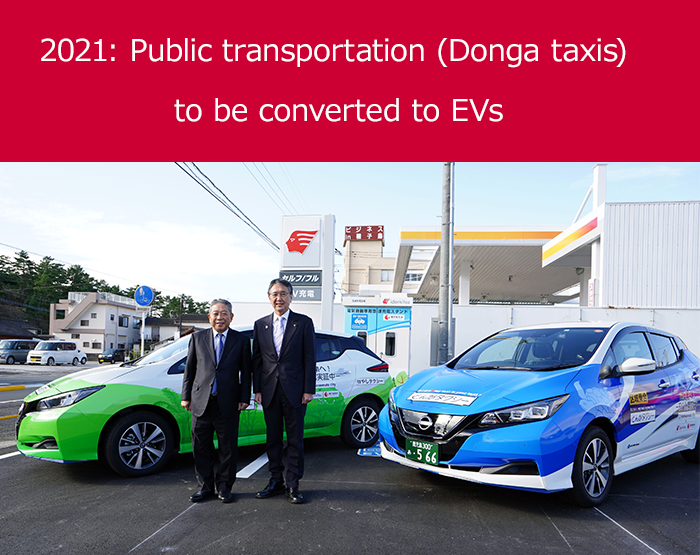
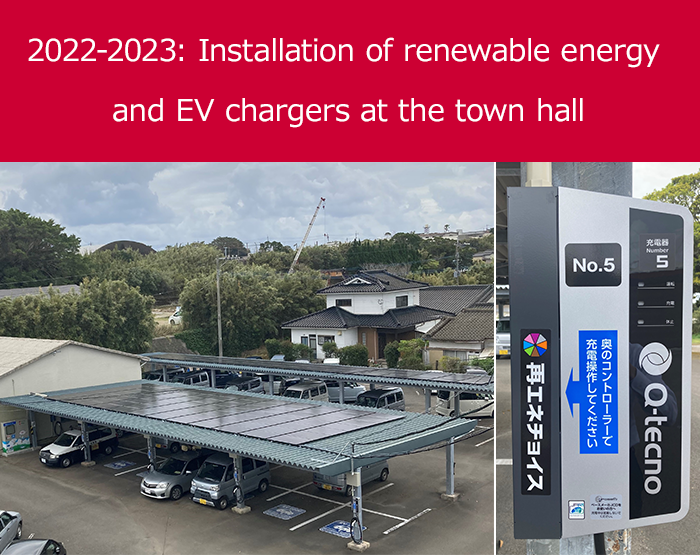
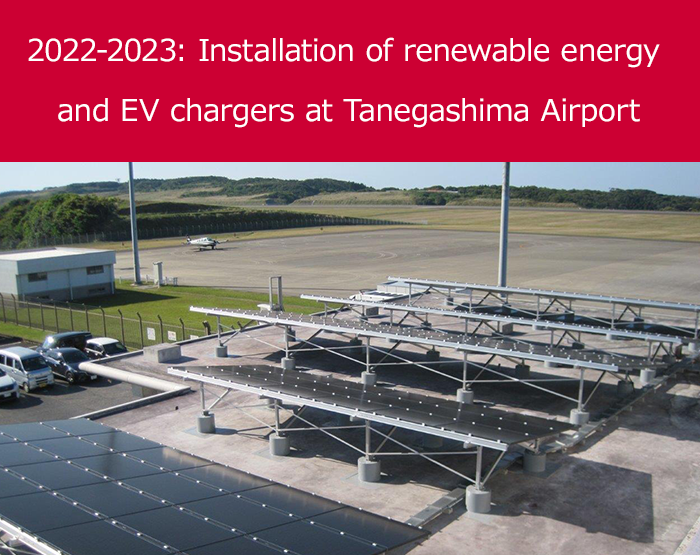
As part of our efforts to promote provide for society of mobility that contributes to the realization of carbon neutrality, we have been converting some of our "Donga Taxi" demand-based shared taxis, which cover the entire city of Nishinoomote, Kagoshima Prefecture, to EVs since 2021. In collaboration with Tanegashima Oil Co., Ltd. and Nishinoomote City, we are conducting demonstrations of EV-related businesses, including the conversion of public transportation vehicles to EVs and the charging of public transportation EVs at service station operated by Tanegashima Oil.
Starting in 2022, we will be supplying renewable energy electricity through small-scale on-site PPAs *1 to the Minamitane Town Hall in Kagoshima Prefecture and Tanegashima Airport Terminal.
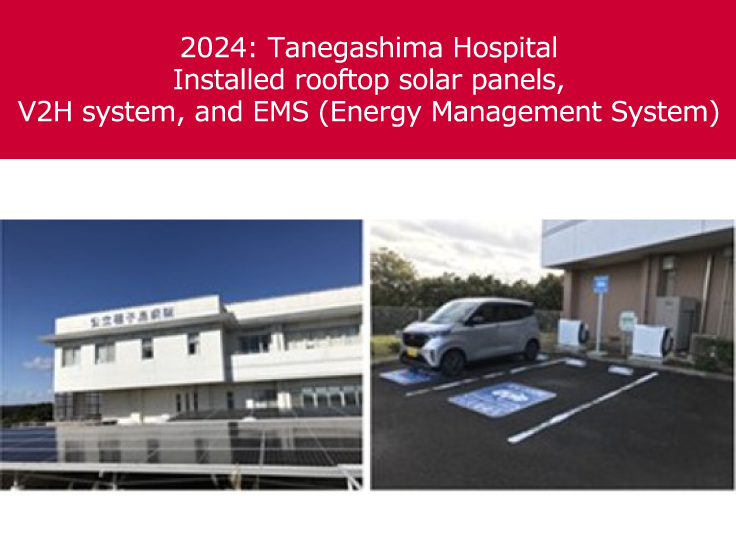
In 2024, Tanegashima Hospital will begin supplying renewable energy through an on-site PPA, and will also introduce a V2H and energy management system (EMS) to reduce electricity bills by discharging electricity from EVs to cut peak demand. Furthermore, in the event of a power outage, power can be supplied from solar power generation and EVs.
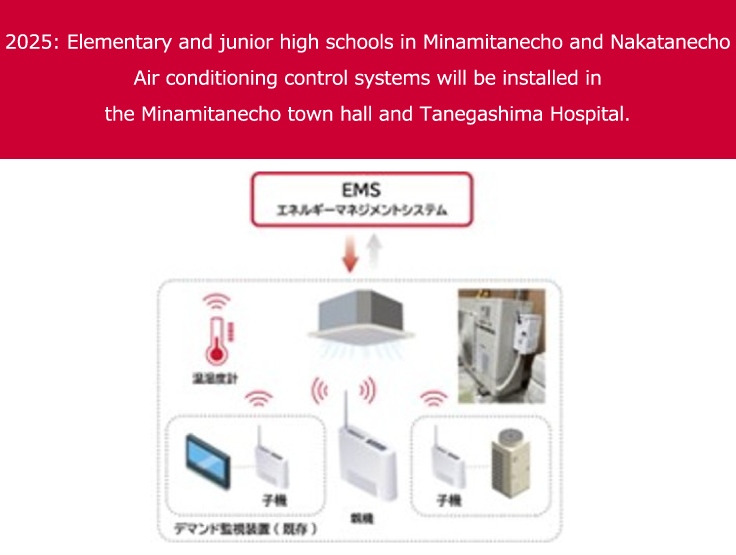
Furthermore, in 2025, air conditioning control systems will be installed at three elementary and junior high schools in Minamitane and Nakatane towns, Minamitane town hall, and Tanegashima Hospital. By appropriately controlling power consumption while maintaining comfort, this will reduce CO₂ emissions and electricity bills.
Through these demonstration projects and businesses, we will promote local energy production and consumption and energy conservation on Tanegashima, and by raising environmental awareness on the island, we will contribute to achieving carbon neutrality.
-
On-site PPA: A type of power purchase agreement in which solar power generation facilities owned by the PPA operator are installed on the roofs of customer properties, offices, factories, etc., to supply electricity.
Introduction of "idemitsu CN Support Service" to Kunitomi Town Hall in Miyazaki Prefecture
We offer the "Idemitsu CN Support Service," a one-stop service that packages our group's solutions and supports local governments and companies aiming to reduce CO₂ emissions and achieve carbon neutrality (CN), helping them to convert electricity and mobility to CN and improve disaster resilience.
Kunitomi Town in Miyazaki Prefecture is promoting CO₂ reduction and energy conservation through the introduction of clean energy vehicles with the aim of preventing global warming, and has converted three official vehicles to EVs. In addition, we have installed a solar carport, storage batteries, V2H, an air conditioning control system, and an energy management system (EMS) at Kunitomi Town Hall that links the charging and discharging of storage batteries and EVs with the air conditioning output, providing optimal control in real time.
As a result, in addition to reducing CO₂ emissions and fuel costs, the company has achieved a 16% reduction in contracted power (contract capacity).In addition, in the event of a power outage, power can be supplied from solar power generation and EVs.
Going forward, we will continue to contribute to the realization of carbon neutrality society by promoting the use of renewable energy by local governments and businesses, the introduction of storage batteries and EVs, and energy conservation.
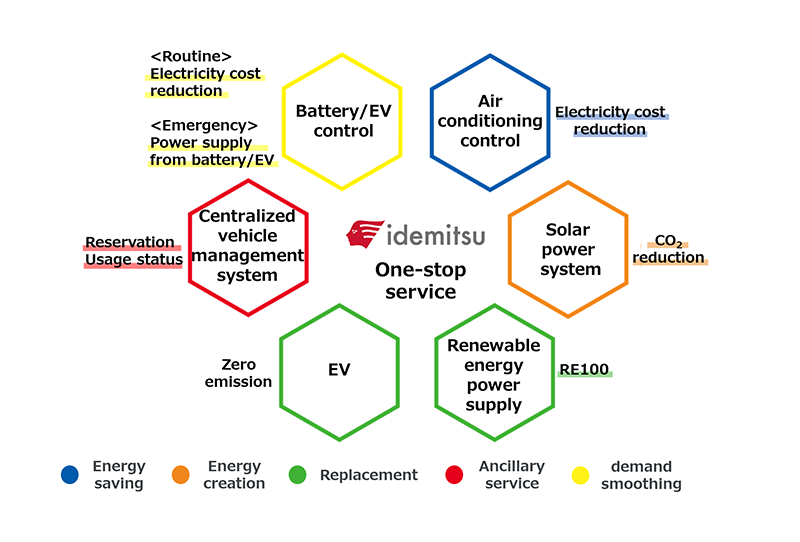
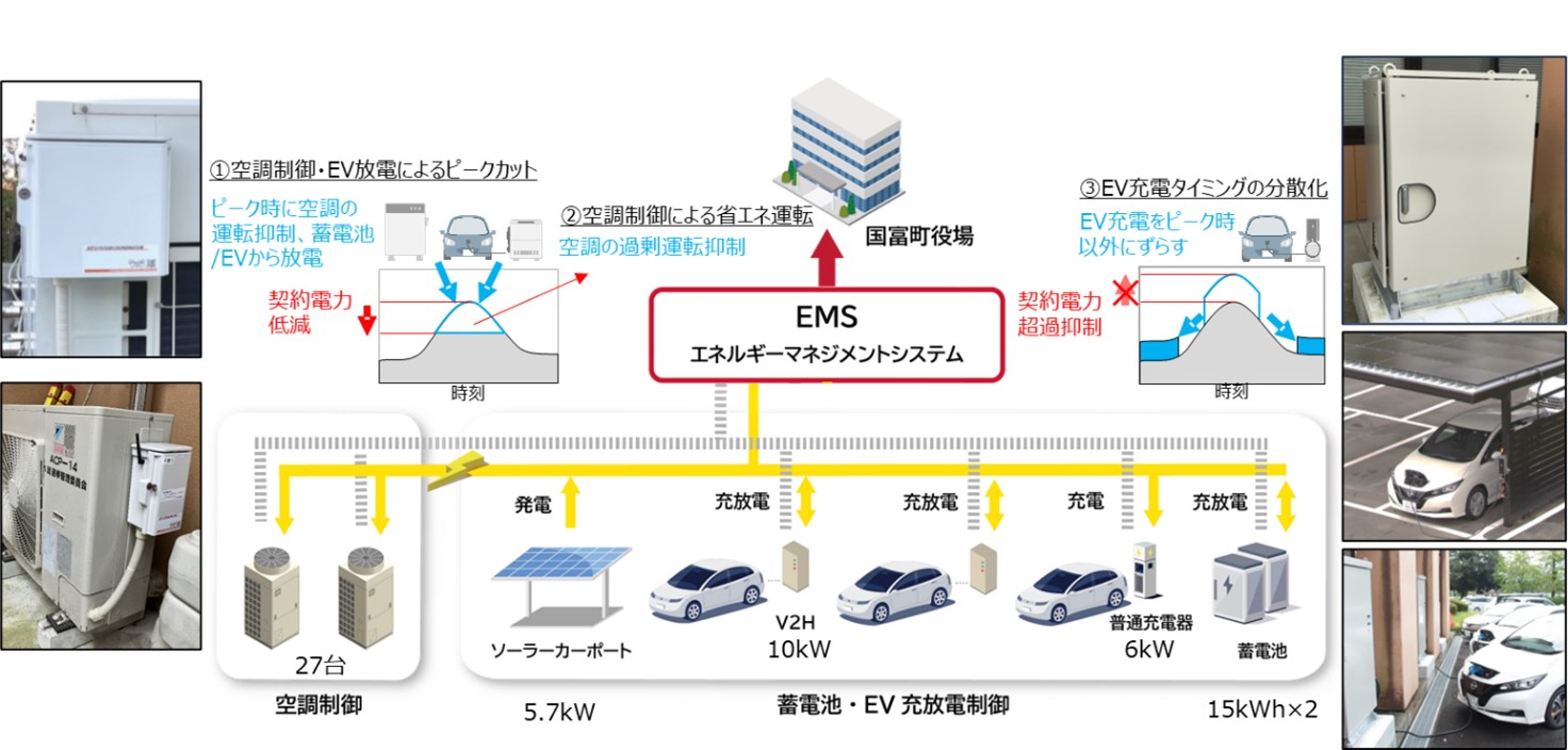
Conceptual diagram of “idemitsu CN support service”
Conceptual diagram of “idemitsu CN support service”
Conceptual diagram of “idemitsu CN support service”
Development of rehabilitation-type day service business
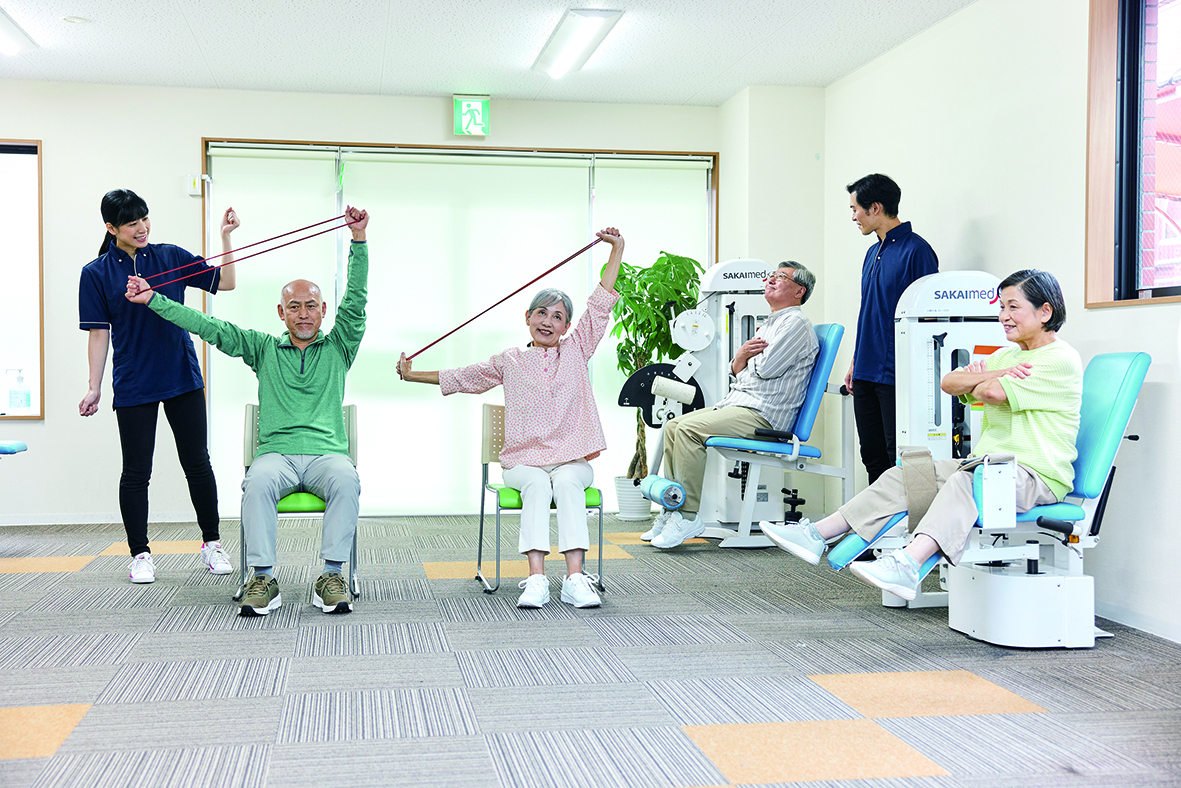
As part of our efforts to implement "next-generation mobility and community with an eye toward an aging society," we have been working on a rehabilitation-type day service business (covered by nursing care insurance) that contributes to maintaining and improving the health of local senior citizens. In 2021, we acquired QLC Produce Co., Ltd. as a subsidiary, and currently contribute to supporting the independence of 20,000 members at approximately 170 Complex nationwide. We will continue to strengthen our store opening activities and develop new services that adapt to the changing environment surrounding nursing care.

Local production and local consumption of energy
Next-generation agricultural solar power generation initiative
Conventional agricultural solar power generation systems using fixed mounting systems have the problem that the panels block sunlight, affecting the growth of crops such as rice, which require a lot of sunlight. This makes it difficult to introduce this system to farmland such as rice paddies, which are widespread across the country.
Our next-generation system uses a solar-tracking mounting system and bifacial solar panels, and automatically adjusts the angle of the panels according to the movement of the sun, prioritizing sunlight on the crops during the growing season to maximize the amount of sunlight reaching the fields, and maximizing sunlight reaching the panels outside of the growing season.In addition, by generating electricity on the backside as well, we aim to "achieve both farming and power generation" by controlling and optimizing the environmental conditions suitable for crop growth while ensuring the same amount of electricity generation as field-mounted power generation equipment throughout the year.
In a demonstration using the first unit (45kW) installed in a rice paddy in Kisarazu City, Chiba Prefecture, it was confirmed that there were no problems with the yield and quality of the harvested rice, the amount of power generated, or technical aspects such as panel control. Based on this, a second unit will be constructed in fiscal 2025 in a rice paddy (approximately 30,000 square meters) in Komatsushima City, Tokushima Prefecture, scaled up to 2,000kW, and verification will be conducted to see whether the expanded scale will enable farming and power generation comparable to the first unit, including confirmation of business feasibility.
Our company is focusing on the effective utilization of rice paddies, which account for more than 50% of all farmland, as new candidate sites for large-scale solar power generation, where a shortage of suitable land is an issue. Farmers can expect to secure new sources of income (land rent, etc.) by utilizing their existing farmland while continuing to farm.
We will work with the local community to contribute to achieving carbon neutrality through the expansion of solar power generation, improving the region's energy self-sufficiency rate, and realizing sustainable farming.
This system won the 2023 Good Design Award, sponsored by the Japan Institute of Design Promotion, and the New Energy Foundation Chairman's Award at the 2024 New Energy Awards, sponsored by the New Energy Foundation.
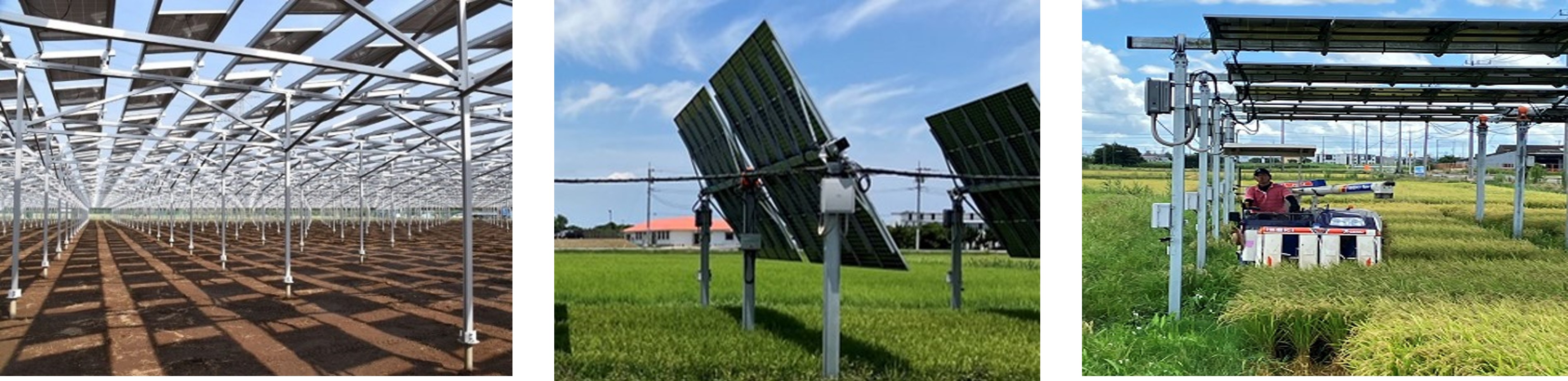
Conventional agricultural solar power
Conventional agricultural solar power
Conventional agricultural solar power
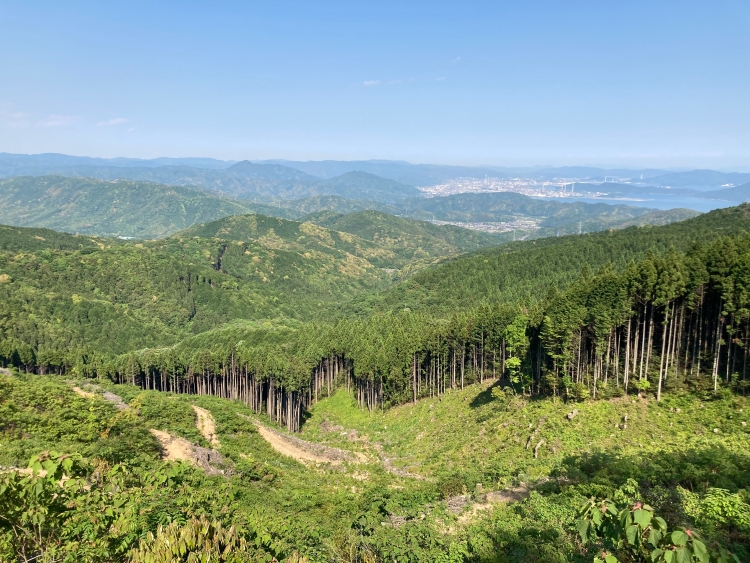
Participating in the Council for Promoting the Utilization of Wood Biomass Materials in Shunan City, Yamaguchi Prefecture- Demonstrating and promoting the utilization of wood biomass materials to promote local energy production and consumption and forestry development -
In January 2021, we participated as a council member in the Wood Biomass Material Utilization Promotion Council, established by Shunan City, Yamaguchi Prefecture. Taking advantage of Shunan City's characteristics of having both abundant forest Resources and biomass power generation facilities, the council will promote the utilization of domestically produced wood biomass materials with the aim of promoting local energy production and consumption and promoting forestry.
In September 2022, as part of the council's activities, a joint afforestation demonstration project agreement was signed with Shunan City, Tosoh Corporation, Tokuyama Corporation, and Marubeni Corporation, and multiple tree species, including fast-growing trees, were planted in part of Shunan City's municipal forests in 2022 and 2023. The project is examining the short-term, low-cost production of biomass using fast-growing trees, as well as the reduction of transportation costs by taking advantage of the proximity of forests to consumer areas. Based on this demonstration experiment, the project aims to expand wood biomass production using fast-growing trees to other areas of the city, and will also discuss ways to utilize domestic wood biomass.
Aiming to supply energy with lower carbon emissions, we are operating a biomass power plant at Tokuyama Complex on the site of a former Refinery. Going forward, together with Shunan City, we and Tokuyama Complex will continue to promote the use of renewable energy and the establishment of a model for local production and consumption of energy.
Promoting collaboration agreement with Saitama City
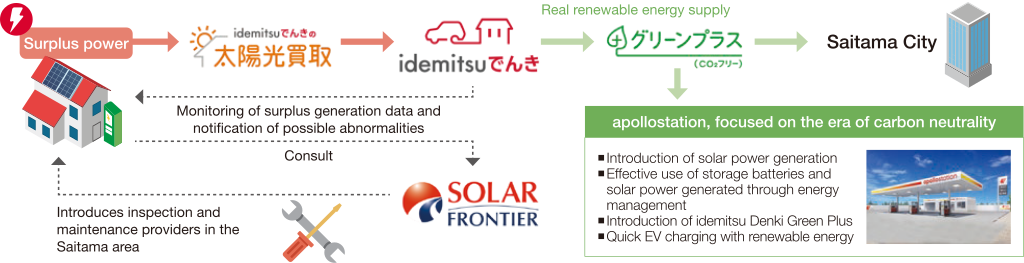
In the "Partnership Agreement on Promoting the Use of Renewable Energy, etc., Toward the Realization of a Zero Carbon City" concluded with Saitama City, we are developing a local production and consumption model in which surplus solar power generated by ordinary households in the city is supplied to facilities within the city through our company. In this model, we also provide a "notification service" that monitors data on surplus electricity and notifies of possible abnormalities in solar power generation equipment, as well as a service that introduces inspection and maintenance businesses, supporting the effective use of solar power generation equipment that was previously installed.
To further promote the agreement, a demonstration project with a view to a carbon-neutral era is planned at apollostation in the city. The project will introduce solar power generation equipment, storage batteries, and energy management, as well as provide an EV rapid charging service and charge EVs with renewable energy, with the aim of achieving true zero carbon for EVs.
Through these efforts, we aim to realize the "regional circular symbiosis zone" set out in this agreement.