




Recycling of Used Plastics
In collaboration with partner companies, we are taking on the challenge of converting used plastics, which are difficult to recycle,"oilification Technology", which decomposes them into a state similar to crude oil. We aim to recycle it as a raw material for petrochemicals and Petroleum.
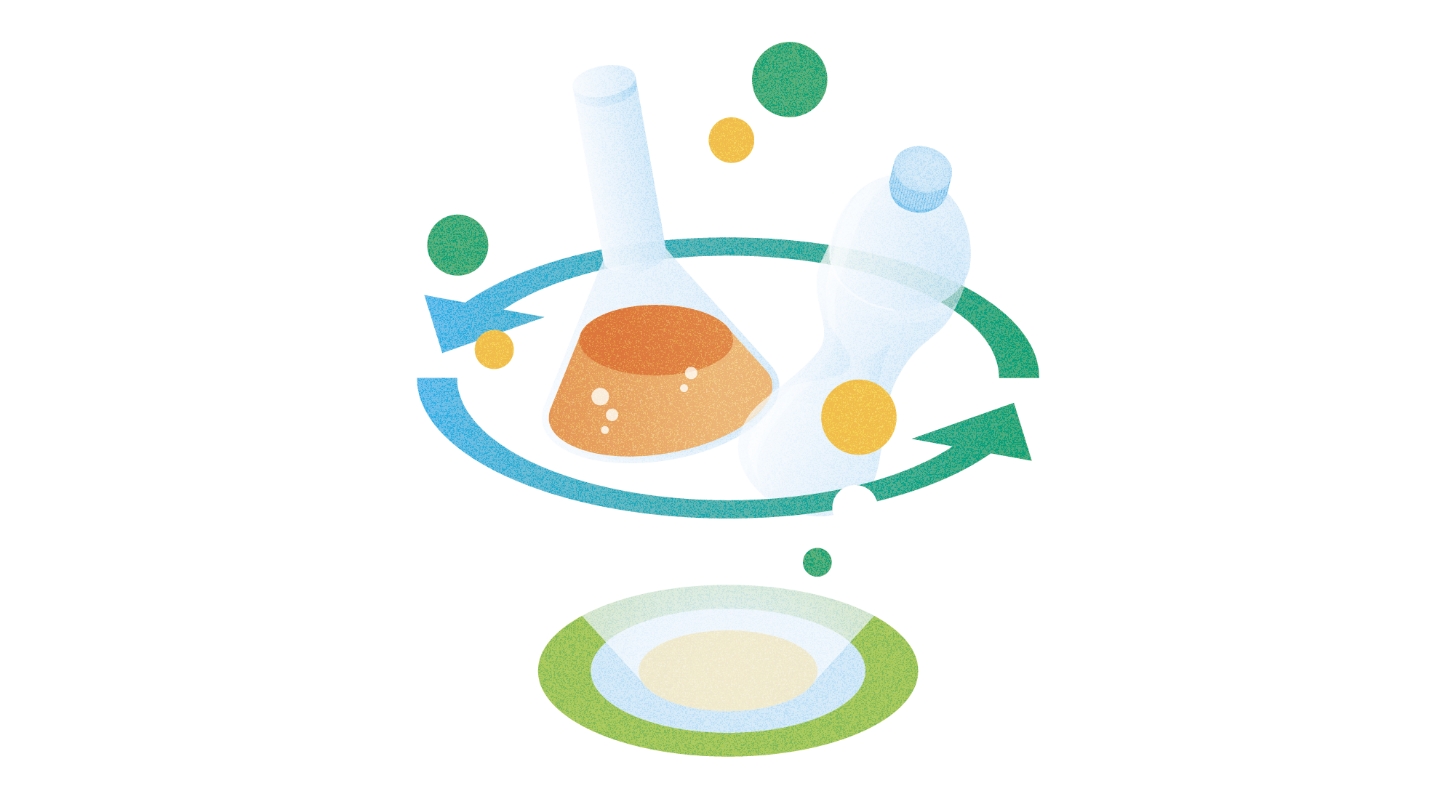
At some of Idemitsu Kosan's manufacturing bases, Refinery that refine oil and chemical plants that manufacture petrochemicals are located on the same site. Our strength is that we can handle everything from oil refining to petrochemical manufacturing all at once. While providing materials for plastic products that support a convenient lifestyle, Idemitsu believes that it also has Responsibility to protect the global environment now and in the future.
Utilizing the knowledge and equipment we have cultivated over many years of oil refining and petrochemical manufacturing, we are challenging ourselves with "oilification Technology" that breaks down used plastics, which are mixtures of multiple plastics and have been considered difficult to recycle, down to a state close to that of crude oil. It is a method called "chemical recycling", and is attracting attention as an initiative that can transform to a recycling-oriented society by utilizing existing infrastructure.
Utilizing the knowledge and equipment we have cultivated over many years of oil refining and petrochemical manufacturing, we are challenging ourselves with "oilification Technology" that breaks down used plastics, which are mixtures of multiple plastics and have been considered difficult to recycle, down to a state close to that of crude oil. It is a method called "chemical recycling", and is attracting attention as an initiative that can transform to a recycling-oriented society by utilizing existing infrastructure.
Situation surrounding used plastics
Plastic products are inseparable from our lives. More than 8 million tons of plastic is discarded each year in Japan, but only 20% is recycled as Resources.
More than 50% of it is thermally recycled (a method of converting it into fuel and using it as an energy source), and there are concerns about the impact of CO₂ emissions. As interest in climate change and ocean plastic issues increases, there is a need to efficiently recycle plastic and circulate it as Resources.
More than 50% of it is thermally recycled (a method of converting it into fuel and using it as an energy source), and there are concerns about the impact of CO₂ emissions. As interest in climate change and ocean plastic issues increases, there is a need to efficiently recycle plastic and circulate it as Resources.
Why Idemitsu Is Taking on This Challenge and Its Strengths that Enable It to Do So
Attempts have been made to develop oil conversion technology for some time, but cost and safety issues have prevented commercialization. As a company that has been involved in everything from oil refining to petrochemical manufacturing, we have the know-how, knowledge, and infrastructure to handle hazardous materials. We believe that this is an undertaking that only we can take on, in cooperation with our partner companies. In order to break down used plastics into a state close to crude oil and recycle them as raw materials for petrochemical products and fuel oil, Idemitsu's experience and infrastructure cultivated in oil refining and petrochemical manufacturing are essential.
Future Developments
We have been working with Environmental Energy Co., Ltd. since 2019 to develop "oil-making technology" for used plastics, and have been conducting demonstration studies since 2021. In April 2023, we decided to invest in commercial production facilities for oil-making chemical recycling in an area adjacent to our Chiba Complex.
Specifically, we will build an oil-chemical recycling facility and convert plastic into oil. The resulting oil will be refined, decomposed, and polymerized at Chiba Complex' oil refining and petrochemical facilities to produce "renewable chemicals" and "renewable fuels." Construction is scheduled for completion in the second half of fiscal 2025, with the goal of processing 20,000 tons of used plastic per year.
In October 2023, we announced that we would begin a demonstration experiment to turn used plastic generated at Takenaka Corporation's construction sites into raw materials. We will confirm whether the recycled oil produced by our subsidiary Chemical Recycle Japan, Co., Ltd. can be used as a raw material petrochemicals and Petroleum, and will also verify the feasibility of Resources it.
In addition to Resources recycling, we have also begun building a supply chain for biomass plastics, and are taking on the challenge of contributing to carbon neutrality and Resources recycling in the development of materials.
*As of August 8, 2025
Specifically, we will build an oil-chemical recycling facility and convert plastic into oil. The resulting oil will be refined, decomposed, and polymerized at Chiba Complex' oil refining and petrochemical facilities to produce "renewable chemicals" and "renewable fuels." Construction is scheduled for completion in the second half of fiscal 2025, with the goal of processing 20,000 tons of used plastic per year.
In October 2023, we announced that we would begin a demonstration experiment to turn used plastic generated at Takenaka Corporation's construction sites into raw materials. We will confirm whether the recycled oil produced by our subsidiary Chemical Recycle Japan, Co., Ltd. can be used as a raw material petrochemicals and Petroleum, and will also verify the feasibility of Resources it.
In addition to Resources recycling, we have also begun building a supply chain for biomass plastics, and are taking on the challenge of contributing to carbon neutrality and Resources recycling in the development of materials.
*As of August 8, 2025
 return