




2025.05.30
The main ingredient of the cattle feed "RUMINUP" has been officially designated by the Ministry of Agriculture, Forestry and Fisheries as Feed Additive that reduces methane gas in cattle burps.
- Resource conservation and recycling
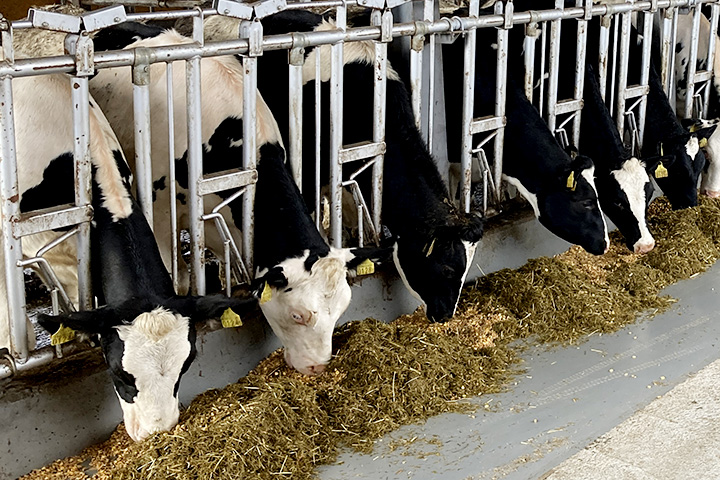
"Is it true that the Idemitsu Group is making beef rice?"
Idemitsu Kosan Group, which supports people's lives with energy and materials, actually produces feed for cows. But it's not just any feed, it's a special feed that "reduces the methane gas contained in cow burps and protects the earth." The feed is called "RUMINUP."
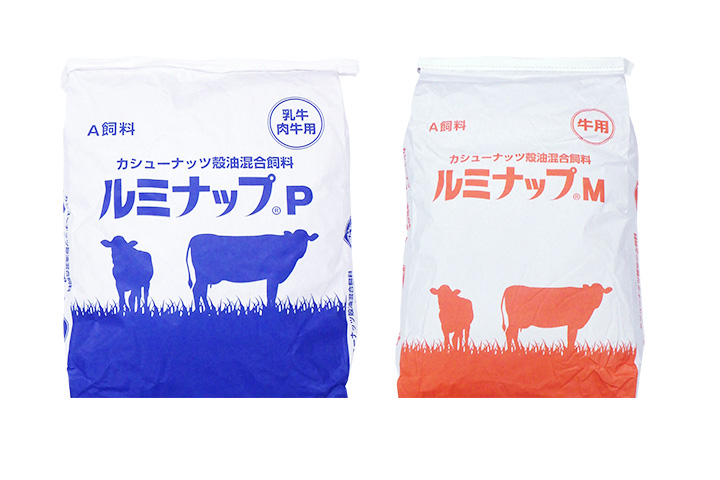
"RUMINUP" functional feed developed and manufactured by the Idemitsu Group
Could reducing the amount of methane gas in cow burps help protect the planet?
Methane gas, contained in cow burps, is one of the greenhouse gases that causes global warming. In fact, it has a greenhouse effect about 25 times that of CO₂. Methane gas accounts for about 20% of the greenhouse gases emitted on Earth, and is said to be the second largest cause of global warming after CO₂.
About 40% of the total methane gas emissions come from the burps, farts, and excrement of livestock such as cows, sheep, and goats. Of these, the methane gas contained in cow burps has a particularly large impact. Cows eat a huge amount of feed, about 30 kg, every day, which is fermented and broken down in their four huge stomachs. During this process, the methane gas produced in the first stomach (rumen) is excreted as a burp.
As shown in the graph below, agriculture (mainly the livestock industry, including fermentation in the animal's digestive tract) accounts for a surprisingly large proportion of global greenhouse gas emissions, making measures to reduce the environmental impact urgently needed.
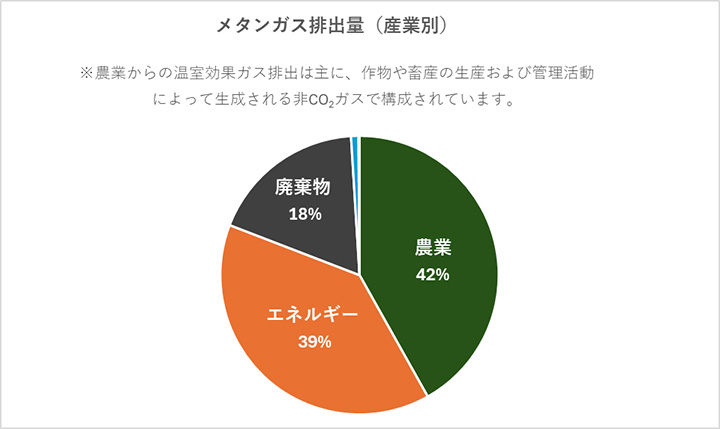
Breakdown of global methane gas emissions by industry
(Source: Calculated from Climate Watch 2022 data)
How can we reduce the amount of methane gas in cow burps?
Contributing to solving this issue is "RUMINUP," a functional feed developed and manufactured by SDS Biotech K.K., a group company of Idemitsu Kosan.
RUMINUP 's main ingredient is cashew nut Cashew Nut Shell Liquid liquid (CNSL), a natural oil extracted by squeezing cashew nut shells. On May 1, 2025, CNSL was officially designated by the Ministry of Agriculture, Forestry and Fisheries as Feed Additive that reduces methane gas in cow burps, and is currently attracting attention.

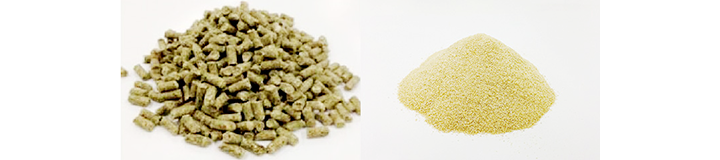
Examples of products containing CNSL
Bacteria live in cows' stomachs and help ferment and break down the large amounts of dietary fiber that cows eat. Some of these bacteria produce methane gas. CNSL, the main ingredient in RUMINUP, maintains the bacteria in cows' stomachs that aid digestion while suppressing the activity of the bacteria that produce methane gas, thereby reducing the methane gas that cows excrete as burps. Suppressing the production of methane without eliminating the activity of the bacteria necessary for digestion. CNSL has overcome this difficult challenge. It is a revolutionary substance that directly contributes to preventing global warming.
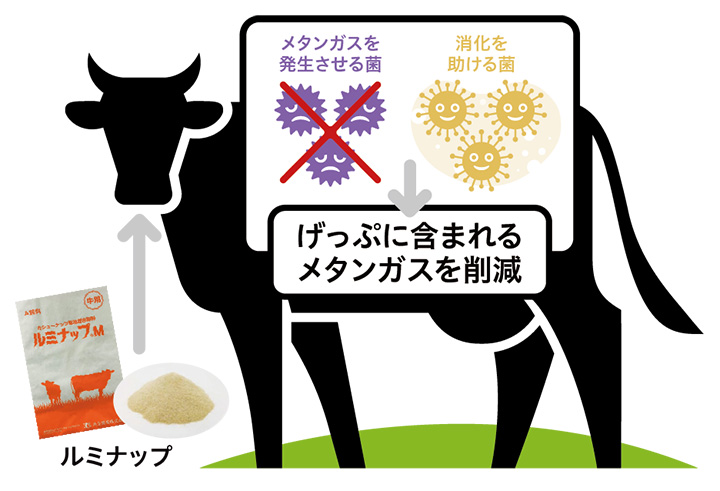
The relationship between cows and "RUMINUP," whose main ingredient is CNSL
Why is the Idemitsu Group researching and developing cattle feed?
Why is the Idemitsu Group, a supplier of energy and materials, developing cattle feed? The reason is that the Idemitsu Group has a mission to "support people's lives."
Based on the idea that "food is an important industry that generates the energy people need to live," Idemitsu has continued to research pesticides and Feed Additive since the 1970s and has accumulated technology.
The Idemitsu Group has been researching CNSL for about 20 years. RUMINUP, which began selling in 2012, has been confirmed to be effective in supporting the health of cows, helping them produce more milk and give birth to healthy calves, and has been well received by customers.
Furthermore, the effect of reducing methane gas has now been recognized by the Ministry of Agriculture Feed Additive, and it has been officially designated as a Supplementation of nutritional components and other effective ingredients in feed" which is intended to "reduce greenhouse gases." After a two-and-a-half-year review period, the results of many years of research have been recognized.
The development of RUMINUP is one example of the environmental challenges Idemitsu Group is taking on. The Next Generation Research Institute, Idemitsu Group's corporate research division, is working to develop further new technologies that contribute to the environment, such as biopesticides and environmentally friendly livestock materials.
Please keep an eye on the Idemitsu Group as it continues to innovate technologically to support the realization of a carbon-neutral, circular society.

 return